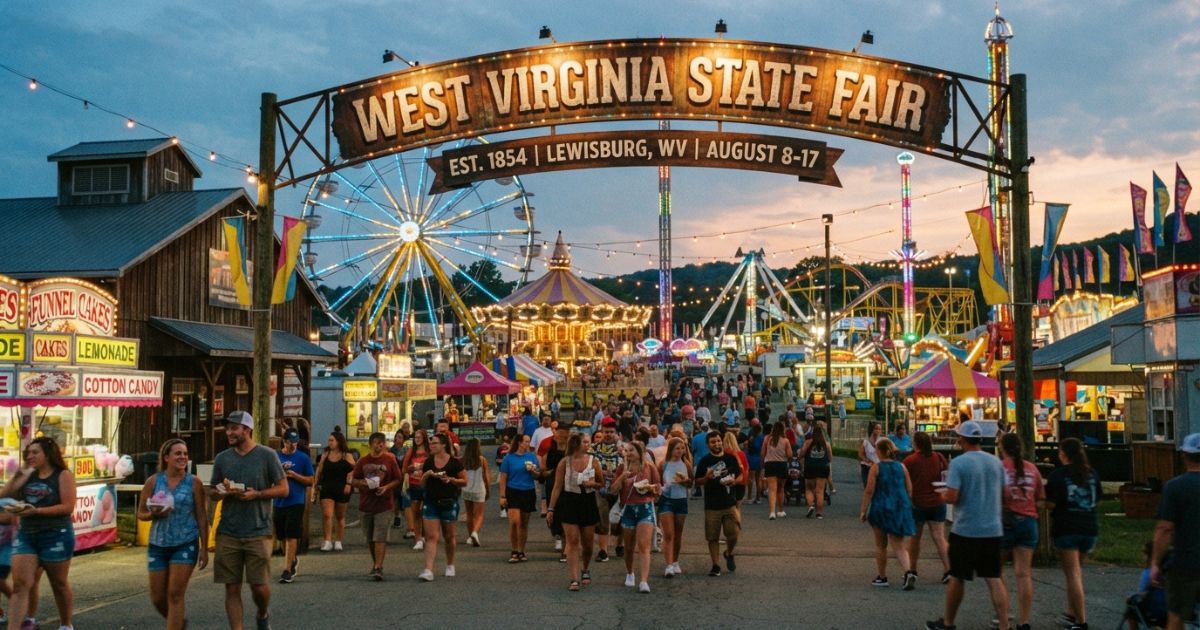
Every August, the small city of Lewisburg swells with visitors as the State Fair of West Virginia takes over the fairgrounds in nearby Fairlea. It is the largest annual gathering in the state, and for ten days it blends prize livestock, carnival rides, grandstand concerts, and homegrown food into one packed schedule.
The fair traces its roots back to local agricultural exhibitions held as early as 1854, was officially named West Virginia state fair in 1941, and celebrated its 100th annual edition in 2025. Whether you have attended for years or are planning your first trip, this guide covers the dates, the layout, the entertainment, and the practical details you need to make the most of your visit.
When and Where It’s Held
The State Fair of West Virginia takes place at the State Fairgrounds, located at 947 Maplewood Avenue in Fairlea, just south of downtown Lewisburg in Greenbrier County. The fair runs for ten days each August, and the 2026 edition, marking the 101st annual fair, is scheduled for August 13 through August 22.
Getting to the Fairgrounds
The fairgrounds sit about three miles south of Interstate 64. Drivers coming from the interstate should take Exit 169 and follow Route 219 south. Within a few minutes you will pass through the heart of historic downtown Lewisburg before reaching the fair’s marquee and its landmark Ferris wheel on the horizon.
A Quick Look at the History
Understanding the fair’s background adds context to what you will see on the grounds:
- The first event to carry the name “State Fair” was held in Wheeling in 1881.
- The Lewisburg fair grew out of local community exhibitions dating back to 1854.
- World War I forced the cancellation of the 1917 and 1918 fairs.
- The state government officially designated the Lewisburg event as West Virginia’s State Fair in 1941.
- World War II shut the fair down again until it resumed in 1946.
- 2025 marked the milestone 100th annual State Fair, and 2026 continues the tradition as the 101st.
That long, occasionally interrupted history is part of what gives the fair its identity today. It is not a new attraction built for tourism. It is a working piece of West Virginia agricultural tradition that has adapted through more than a century of change.
Related Post: Tech FeedBuzzard: Making Technology Easy to Understand
What the Fair Is Built Around
At its core, the State Fair of West Virginia is an agricultural showcase. The concerts and carnival rides draw crowds, but the competitions and exhibit halls are the reason the fair exists in the first place.
Livestock Shows and Judging
Livestock competitions run throughout the ten days and cover cattle, horses, sheep, goats, pigs, and poultry. Farm families travel from across West Virginia and neighboring states to enter their animals in breed classes and judging categories. Many of these shows also lead into livestock sales, where months of raising and training translate into real market value for young exhibitors.
Harness racing is another long-standing tradition at the fairgrounds, giving fairgoers a chance to watch a form of competitive horse racing that has been part of the event for generations.
4-H and FFA Involvement
The 4-H and FFA programs are woven into nearly every part of the fair. Students who have spent the school year raising animals, growing crops, or completing hands-on projects bring that work to Lewisburg for judging. For many West Virginia families, watching a son, daughter, niece, or nephew show an animal or present a project is the entire reason for the trip.
Exhibit Halls Beyond Livestock
The exhibition buildings extend well past animals. Categories typically include:
- Quilts and needlework
- Photography
- Woodworking and craftsmanship
- Baked goods and canned foods
- Fine art and youth artwork
Walking through these halls gives visitors a sense of the skill and effort that goes into rural West Virginia life year round, not just during fair season. For many repeat visitors, the exhibit halls are just as memorable as the midway.
Entertainment and Additional Activities
Once you move past the agricultural core, the fair opens up into a full entertainment lineup that keeps growing each year.
Grandstand Concerts
Nightly concerts are one of the fair’s biggest draws. The grandstand seats several thousand people and has hosted a wide mix of country, bluegrass, and rock performers over the years. Recent lineups have featured national touring artists alongside West Virginia natives returning home to perform, which adds a personal touch that larger, more generic state fairs often lack.
Some grandstand shows are included with general admission, while headline concerts and special events like the Buckin’ B Bull Ride require separate tickets. Prices vary by seating section, such as box, grandstand, or ADA seating, and typically include applicable state sales tax and a ticketing fee. The full concert schedule is usually announced in stages between winter and midsummer, so checking the official fair website closer to the event date is the most reliable way to plan around specific artists.
Free Grounds Attractions
Beyond the ticketed grandstand shows, the fair fills its schedule with free entertainment included in gate admission. Past and recent years have featured:
- DockDogs canine jumping and diving competitions
- Circus style thrill shows
- Comedy and magic acts with an agricultural twist
- Live glassblowing demonstrations
- Fireworks displays over the fairgrounds
The Carnival Midway
The midway is operated by a professional carnival company and includes rides ranging from gentle attractions for young children to thrill rides like spinning and drop-tower style attractions. Ride access is usually sold separately from gate admission, either as individual tickets or as an unlimited ride pass valid for a set number of hours.
Food You Can Only Get at the Fair
Fair food deserves its own mention. Vendors typically offer a mix of classic fair staples and local specialties, including:
- Corn dogs and funnel cakes
- Fresh roasted corn on the cob
- Steak sandwiches
- Homemade ice cream and giant cinnamon rolls
- An FFA-run ham stand serving locally raised pork
Because the schedule spans ten days across two weekends, many families plan multiple visits rather than trying to see everything in a single trip.
WVL at the State Fair
The West Virginia Lottery, often referred to by fairgoers simply as WVL, has maintained a dedicated presence at the fairgrounds for years. Its building is one of the recognizable fixtures on the grounds, where visitors can purchase draw game tickets and scratch-off games in person, often alongside promotional giveaways and branded merchandise.
Beyond the fair itself, the Lottery’s presence connects to a broader purpose. Since 1986, lottery proceeds have supported four main beneficiary areas across the state, and tourism infrastructure is one of them. That means a portion of the money generated through everyday lottery play helps fund the kind of infrastructure that supports events like the State Fair of West Virginia, creating a direct link between the games sold inside the WVL building and the roads, facilities, and tourism development that make the fair possible in the first place.
Admission and Getting There
Planning ahead on tickets and logistics makes a noticeable difference in how smooth your visit feels, especially on busy weekend days.
Ticket Prices and Discounts
General admission is required for entry, and pricing typically follows this pattern:
- Advance gate admission is discounted compared to day-of pricing for visitors ages 11 and older.
- Children age 10 and younger usually receive free gate admission every day of the fair.
- Special discount days, such as a Dollar Day or a themed day like West Virginia Day, offer reduced admission at specific points during the ten-day run.
- Multi-day admission packages are sometimes available for visitors planning to attend more than once.
Because pricing and promotions can shift slightly from year to year, checking the official State Fair website shortly before your visit is the best way to confirm current rates and any early-purchase deadlines.
Parking and Arrival Tips
Parking is available on site near the fairgrounds. A few practical tips can save you time:
- Arrive early on weekends, since parking areas and gate lines fill up quickly during peak afternoon and evening hours.
- Wear comfortable, closed-toe shoes, since the fairgrounds cover a large amount of ground between the exhibit halls, midway, and grandstand.
- Check the fair’s bag policy before you go, since many grandstand events restrict bag size and require clear bags for larger items.
- Bring cash as a backup for smaller vendors, even though most fair operations now accept cards.
Exploring Lewisburg While You’re There
Downtown Lewisburg is worth building into your trip. It sits within easy reach of the fairgrounds and offers independent restaurants, local shops, and a historic downtown district. Many visitors treat a stop in Lewisburg as a natural extension of their fair day, especially if they are traveling from farther away and want to make the most of the trip.
Conclusion
The State Fair of West Virginia has earned its place as one of the state’s most enduring traditions by staying true to its agricultural roots while continuing to grow its entertainment lineup year after year. Whether you are drawn in by the livestock competitions, the 4-H and FFA showcases, the nightly concerts, or simply the food and midway rides, the ten-day event in Lewisburg offers something for nearly every visitor.
If you are planning a trip, the keys to a smooth visit are simple: know the exact dates, buy discounted tickets in advance when possible, arrive early on weekends, and leave room in your schedule to explore both the fairgrounds and downtown Lewisburg. With over a century of history behind it, the State Fair of West Virginia continues to be a highlight of summer in the Mountain State.
Frequently Asked Questions
When is the State Fair of West Virginia held each year?
The fair is held annually in mid-August, running for approximately ten days at the State Fairgrounds in Fairlea, near Lewisburg.
Where exactly is the State Fairgrounds located?
The fairgrounds are located at 947 Maplewood Avenue in Fairlea, West Virginia, about three miles south of Interstate 64’s Exit 169.
How much does admission cost?
Gate admission is typically discounted for advance purchases compared to buying at the gate, and children age 10 and under usually get in free every day.
Are concert tickets included with gate admission?
Some grandstand performances are included with general admission, while headline concerts and special events like bull riding usually require a separate ticket.
Is the fair a good event for young children?
Yes, the fair offers free admission for young children, gentler midway rides, and free attractions like animal shows and circus acts that appeal to families with kids of all ages.
Do I need to bring cash?
Most vendors and ticket booths accept cards, but carrying some cash is a good backup for smaller food stands and craft vendors.
Is parking available on site?
Yes, parking is provided on site near the fairgrounds, though arriving early on weekends is recommended since lots and gate lines fill up during peak hours.